Side effect guides
Tirzepatide Side Effects
Tirzepatide is the active molecule behind two FDA-approved brand-name drugs, Mounjaro and Zepbound, both made by Eli Lilly, as well as compounded versions that have circulated during and after the recent tirzepatide supply shortage. Because Mounjaro and Zepbound share the identical dual GIP/GLP-1 receptor agonist, their side-effect profiles are effectively the same drug experience under different labels and indications. This page focuses specifically on what side effects to expect and watch for with tirzepatide as a class, gastrointestinal effects, dose-related patterns, and the more serious risks named in FDA labeling, rather than on dosing or titration mechanics, which are covered on Pokii's separate tirzepatide tracking page. None of this is personal medical advice; it is a factual summary meant to help you recognize patterns worth discussing with a prescriber.
The common side-effect profile, and why it shows up around dose changes
Across FDA labeling and pharmacy references, the most frequently reported tirzepatide side effects are gastrointestinal, and this holds true whether someone is taking Mounjaro, Zepbound, or a compounded version of the same molecule. The most commonly cited effects are nausea, diarrhea, vomiting, constipation, abdominal pain or general stomach discomfort, decreased appetite, injection site reactions, fatigue, and in some reports dyspepsia (indigestion) and belching. These are typically described as mild to moderate in severity rather than severe, and they tend to diminish over time as the body adjusts.
A notable pattern worth understanding is that these effects are dose-related and often most pronounced around dose increases. Tirzepatide is titrated upward in steps, and a step up in dose is a common moment for GI symptoms to intensify or reappear even in someone who had settled in comfortably at a lower dose. Because the underlying titration structure is the same across Mounjaro and Zepbound (a shared starting dose, the same 2.5 mg increments, and the same recognized maintenance doses), this dose-and-symptom relationship applies regardless of which brand, or which indication, someone is using. Recognizing that a new or worsening symptom often lines up with a recent dose change, rather than appearing out of nowhere, is one of the more useful patterns to notice over time.
Serious risks named in FDA labeling
Beyond the common GI effects, tirzepatide's FDA label carries a boxed warning related to thyroid C-cell tumors that were observed in rodent studies; whether this risk translates to humans has not been established, and the boxed warning exists as a precaution based on the animal data rather than confirmed human outcomes. The label also describes several other risks that, while less common than nausea or diarrhea, are more serious in nature: pancreatitis, gallbladder problems, hypoglycemia (low blood sugar), which is particularly relevant for anyone also taking insulin or a sulfonylurea, acute kidney injury, which can often develop secondary to dehydration from significant vomiting or diarrhea, and hypersensitivity reactions. This summary is not an exhaustive safety list, and full prescribing information should be consulted for the complete set of warnings, contraindications, and drug interactions relevant to any individual's situation. If a symptom feels severe, persistent, or unusual, that is a conversation for a prescriber, not something to self-diagnose from a summary like this one.
Why detailed notes matter when you've switched products or take other medications
The tirzepatide landscape has gotten more complicated to track precisely because so many people have moved between products. During the recent shortage period, compounded tirzepatide was more widely available; as of this review, tirzepatide is off the FDA shortage list, and routine, mass compounding of tirzepatide as a copy of Mounjaro or Zepbound is not broadly permitted under current federal rules, with only narrow, individualized medical-necessity exceptions remaining. That regulatory shift means a meaningful number of people have transitioned, or are currently transitioning, from a compounded product to Mounjaro or Zepbound, or have switched between Mounjaro and Zepbound themselves for insurance or availability reasons. Anyone in that position is effectively asking a harder question than "what side effects does tirzepatide cause": they're asking whether a new symptom, or a symptom that changed in intensity, tracks with the new formulation, a different injection device, a dose that reset during the switch, or something else entirely, like another medication.
This is exactly the situation where casual memory falls short and detailed, dated notes become useful. A symptom that seems to have appeared "after switching" is much easier to evaluate with an actual log of which product was used on which date, at what dose, alongside notes on how the person felt in the days following. The same logic applies to anyone taking tirzepatide alongside other medications, including insulin, sulfonylureas, or unrelated prescriptions, where a new symptom could plausibly relate to an interaction rather than tirzepatide alone. Bringing a prescriber a clear, dated record of symptoms tied to specific doses and specific products is far more useful than trying to reconstruct a timeline from memory during a short appointment.
What Pokii supports for tracking tirzepatide side effects
Pokii's built-in medication library lists tirzepatide-molecule entries separately by brand and form, with Mounjaro, Zepbound, and Tirzepatide (Compound) all appearing as distinct entries alongside other GLP-1/GIP medicines. Because Mounjaro, Zepbound, and compounded tirzepatide share the same active molecule, Pokii's projected-levels chart includes a Per Compound display mode that groups branded and compounded versions of the same molecule together on one curve, in addition to Combined and Per Medication views, which is useful for anyone who has switched between, say, a compounded product and Mounjaro, or between Mounjaro and Zepbound, and wants to see their history in context rather than as disconnected entries. For compounded tirzepatide or non-standard formulations not covered by the built-in compound entry, You can add a custom medication profile with details like half-life, Tmax, and bioavailability, letting the compounded dosing be tracked with the same precision as a branded product.
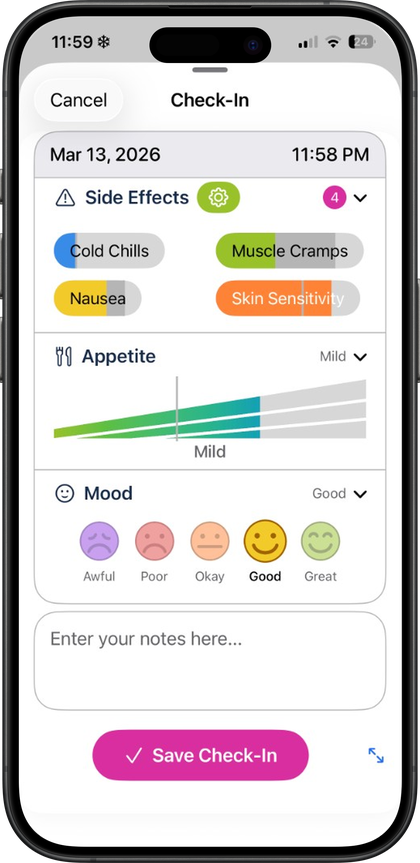
Day to day, Pokii's daily check-in lets someone log side effects with severity and free-text notes, along with appetite and mood, and ties those entries to dose timing in the app's history, which is exactly the kind of dated, product-specific record that makes a switch, or a suspected interaction, easier to evaluate later. Tracking multiple medications at once matters specifically for anyone tracking a transition between two tirzepatide products, since a switch means having two medication entries active during the changeover period. For appointments, You can generate a configurable PDF progress report that can include side effects, dose history, and notes in one document to bring to a prescriber, rather than relying on memory. As with any part of Pokii, projected medication levels shown on the chart are an educational model, not a lab result, and the app does not provide medical advice, diagnosis, or treatment; it is a tool for keeping an accurate, exportable record to make conversations with a healthcare provider more informed.
Always follow your prescriber’s instructions for GLP-1 medications. Pokii helps you log and visualize your journey; it does not replace professional care.