Side effect guides
Ozempic Side Effects Tracker
Ozempic (semaglutide) is generally well tolerated, but like any GLP-1 receptor agonist, it carries a known side effect profile that's worth understanding before and during treatment. This page focuses specifically on what those side effects tend to look like, when they tend to show up, and how logging them alongside your dose can make check-ins with your prescriber more useful. Nothing here is medical advice — talk to your prescriber about any symptom you're experiencing, especially anything severe or unexpected.
Ozempic's known side effect profile
Per Ozempic's official patient-facing safety information, the most commonly reported side effects of the Ozempic injection are nausea, vomiting, diarrhea, abdominal (stomach) pain, and constipation. These are described as predominantly gastrointestinal in nature, and they're reported more frequently when someone is starting treatment or shortly after a dose increase. The newer Ozempic tablet carries the same GI list plus decreased appetite as an additional commonly reported effect.
That timing detail matters. Ozempic's labeled titration schedule for the injectable pen starts low and increases in steps: 0.25 mg once weekly for weeks 1–4 (an initiation dose, not intended for glycemic control on its own), then 0.5 mg once weekly for weeks 5–8 as the first maintenance dose, then optional increases to 1 mg around weeks 9–12 and up to a maximum of 2 mg from week 13 onward, only if additional glucose control is needed. Dose increases happen no more often than every four weeks. Because GI side effects are reported more frequently around treatment start and after each step up, someone on Ozempic may reasonably expect symptoms to cluster around those transition points rather than being constant throughout treatment — though individual experience varies, and only a prescriber can say what's typical for a given person's plan.
Prescribers can also slow or pause the titration schedule if side effects are difficult to tolerate, which is one reason having a clear record of when symptoms started relative to a dose change can be a useful thing to bring to an appointment, rather than trying to recall it from memory.
Serious risks worth being aware of
Beyond the common GI effects, Ozempic's safety information also flags a set of possible, less common but more serious risks. These are described by the manufacturer as "possible serious side effects" rather than expected or common ones, and they include: possible thyroid tumors, including medullary thyroid carcinoma (Ozempic is contraindicated for people with a personal or family history of medullary thyroid carcinoma or Multiple Endocrine Neoplasia syndrome type 2); pancreatitis; diabetic retinopathy complications or vision changes; hypoglycemia, particularly when Ozempic is combined with insulin or sulfonylureas; dehydration or kidney problems that can result from significant GI fluid loss (vomiting or diarrhea); gallbladder problems; serious allergic reactions; and aspiration risk during procedures that require anesthesia or sedation.
This is not a complete safety listing, and it isn't meant to function as one — Ozempic's full prescribing information and medication guide cover the label in detail. The point of naming these here is awareness, not alarm: most people taking Ozempic will experience GI-type side effects, if any, and the more serious risks above are flagged by the manufacturer specifically because they're less common but important to recognize. If something feels severe, sudden, or different from typical GI discomfort — including signs of dehydration, persistent severe abdominal pain, or vision changes — that's a reason to contact a prescriber rather than wait it out.
Why tracking dose timing alongside symptoms helps
Because GI side effects are reported more frequently around dose changes, one of the most useful things a person on Ozempic can bring to a follow-up appointment is a simple record of what happened and when: which dose they were on, how long they'd been on it, and what symptoms showed up in that window. Memory alone tends to blur these details together, especially over months of once-weekly dosing, which makes it hard to tell whether nausea three weeks ago was tied to a dose increase, something dietary, or an unrelated illness.
A dose-linked symptom log also gives a prescriber something concrete to work with when deciding whether to hold at the current dose, extend the interval before the next increase, or move forward as planned. Instead of a general "I've been nauseous," a record that shows nausea beginning two days after a step-up and easing by the following week is a much clearer signal for that conversation. This kind of pattern-spotting is exactly the gap that dedicated tracking is meant to fill — it doesn't replace clinical judgment, but it gives both the patient and the prescriber better raw material to reason from.
What Pokii tracks for this
Pokii is a GLP-1 shot tracker built for exactly this kind of pattern-spotting, and Ozempic is one of its built-in medications, so it can be selected directly from Pokii's medication library rather than set up as a custom entry.
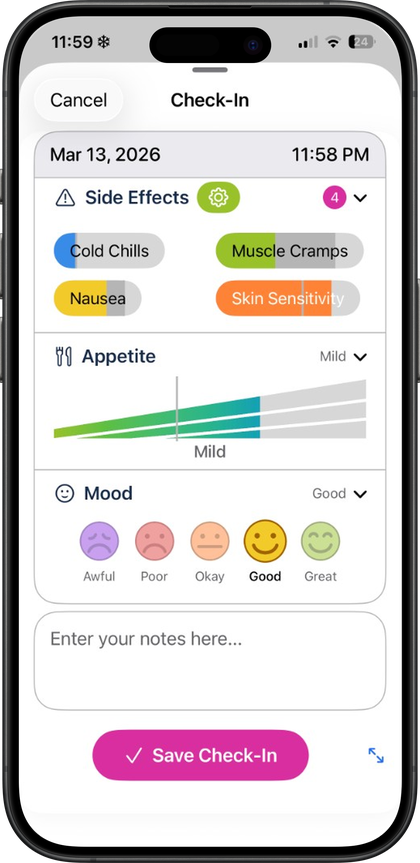
For nausea logging specifically, Pokii's daily check-in lets you record side effects with an intensity rating per effect, alongside appetite, mood, and notes, and shows relative-to-last hints so you can see how today compares with your last entry. The list of side effects shown in check-ins is customizable, so nausea (or any other effect you're watching) can be kept front and center. Side effect entries carry severity and notes and are tied to dose timing in your history — so an entry doesn't just say "nausea," it sits in context next to which dose and how many days into that dose you were.
For hydration, Pokii includes a glass-based water tracker with a daily goal, which is relevant given that GI fluid loss from vomiting or diarrhea is one of the dehydration-related risks flagged in Ozempic's safety information. Pokii also includes smart water reminders that use interval and time-window, pattern-based messaging rather than a single fixed alert.
For dose timing context, every shot is logged with date, time, dose, and notes, with full edit history, and Pokii's dosage history and stats view lets you look back at doses over time. Because side effect entries and shot entries share the same timeline, reviewing "what did the days after my last dose increase look like" is a matter of scrolling the same log rather than piecing together two separate records. Pokii's configurable PDF reports can also include side effects, dose history, and notes together in one document to bring to an appointment.
As with all of Pokii's tracking features, this is an education and organization tool, not a diagnostic one — Pokii does not provide medical advice, diagnosis, or treatment, and any pattern you notice in your log is a starting point for a conversation with your prescriber, not a conclusion on its own.
Always follow your prescriber’s instructions for GLP-1 medications. Pokii helps you log and visualize your journey; it does not replace professional care.