GLP-1 tracker
Protein, Fiber & Water Tracker for GLP-1
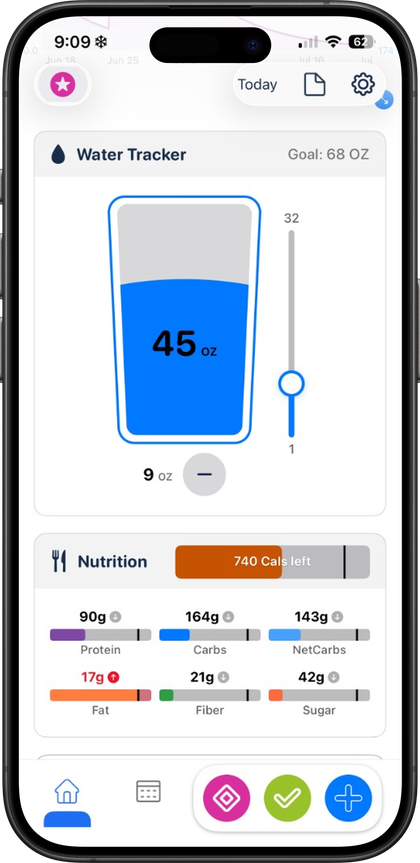
Protein, fiber, and water get talked about together constantly in GLP-1 circles, because appetite suppression tends to touch all three at once: eating less overall makes it easier to fall short on protein and fiber specifically, and to under-drink without noticing. Pokii doesn't treat them as three separate chores. The nutrition dashboard and water tracker already sit side by side on the daily hub, and You can combine them into a single water-and-nutrition module, so the numbers that tend to move together on GLP-1 medications are visible together too.
Why these three show up together on GLP-1 medications
This page isn't the place to re-derive general protein, fiber, or fluid targets — for sourced ranges and the reasoning behind them, see our protein, fiber, and water intake guides. What's worth saying here is why Pokii treats them as a connected group rather than three unrelated numbers. Appetite suppression is the common thread: eating less overall makes it harder to hit protein and fiber intake, and reduced food intake also means less of the fluid that normally comes from meals, on top of nausea, vomiting, or diarrhea that can cause direct fluid loss. Because the same underlying cause (lower overall appetite and intake) can move protein, fiber, and water in the same direction at once, it's useful to look at them side by side rather than checking one number today and a different one tomorrow.
Pokii's role here is tracking and education, not medical advice, diagnosis, or treatment. Projected medication levels shown elsewhere in the app are educational models, not lab results, and the same caveat applies to nutrition and hydration: the app surfaces the numbers, it doesn't tell you what your personal targets should be.
Pokii's combined water and nutrition dashboard module
Water tracking and the nutrition dashboard live in Pokii as separate sections by default: a glass-based water tracker with a daily goal and optional confetti when you hit it, and a nutrition dashboard showing calories, protein, carbs, fat, fiber, sugar, and sodium pulled from Apple Health. Both are part of the same date-scoped daily hub, so they're never far apart, but they're still two distinct modules with their own headers.
Pokii includes a combined water and nutrition dashboard module, which folds both into a single dashboard section instead of two. That means protein and fiber for the day sit directly alongside your water total in one place, rather than requiring a scroll between sections to compare them. It's a presentation change on top of the same underlying data — nothing about how water or nutrition is tracked changes, only how the two are grouped on the dashboard. Pokii also includes custom nutrition targets, so protein and fiber can be tracked against a personal number you've set, not just shown as raw totals with no reference point.
All of Pokii's nutrition and water figures come from Apple Health rather than being entered twice. With permission, Pokii reads dietary water, calories, protein, carbohydrates, fat, fiber, sugar, and sodium from Apple Health, and the dashboard refreshes automatically when those HealthKit samples change. Pokii's AI photo meal capture adds another way in: photograph a meal, get an AI-estimated nutrition breakdown, edit it if needed, and have the full macro set written back to Apple Health, so a scanned meal updates the same combined module a manually logged one would. Because the dashboard can be reordered on Free and modules can be shown or hidden in Pokii, the combined water-and-nutrition section (or the two separate ones) can sit wherever it's most useful in your daily view.
Smart hydration reminders alongside food logging
Water is the one of these three that's easiest to lose track of passively — there's no meal prompt to remind you, the way eating naturally surfaces protein and fiber choices. Pokii's water tracker itself is : glass-based quick add, a daily goal you set, and a small confetti celebration when you reach it. Smart water reminders are built on top of that tracker, using interval- and time-window-based scheduling with pattern-based messaging, rather than a single generic daily alert.
Because those reminders are spaced across the day instead of arriving all at once, they function as a check-in point that doesn't depend on a meal happening first. A reminder can prompt a glass of water at a moment when nothing else on the dashboard would have flagged it, which matters on days when eating (and the fluid that comes with meals) is lighter than usual. The reminder itself leads straight back into the same glass-based quick-add flow used any other time, so acting on it doesn't require leaving the water tracker or digging through a separate screen.
Because water and nutrition can share the combined water-and-nutrition module, a hydration reminder and the day's protein and fiber totals are never more than one section apart. Logging a meal (through Apple Health, another connected app, or Pokii's own AI photo meal capture) and responding to a water reminder both feed the same daily view, and both show up together in the dashboard's "Today's log" timeline alongside shots, check-ins, and weight for that day. That combined daily record is also what Pokii's PDF progress reports can draw from, making a low-water or low-protein stretch easier to describe in a conversation with a doctor or dietitian than trying to reconstruct it from memory across separate apps.
Pokii is a tracking and education tool. It does not provide medical advice, diagnosis, or treatment. Talk with your clinician about dosing, side effects, and any change to your plan.