GLP-1 tracker
Body Measurement Tracker for GLP-1
The scale isn't the only number that can tell you how your body is changing during a GLP-1 journey. Pokii's body measurement tracker lets you log waist, hips, chest, neck, arm, thigh, and ankle measurements alongside your shots and weight check-ins, then look back at that history to see the trend behind the numbers. Because everything lives in the same app you already use to track injections, measurements sit right next to the rest of your progress instead of living in a separate notebook or app.
Why measurements can tell a different story than the scale
A number on the scale can stay flat for a stretch even while other things are shifting, and it can also move for reasons that have nothing to do with the change you're actually looking for. Pokii's weight check-ins track that single number over time, syncing with Apple Health when you enable it, but weight alone doesn't say much about where the change is happening. That's where body measurements come in — tracking waist, hips, chest, neck, arm, thigh, and ankle sizes gives you a second, independent way to see how your body is changing that doesn't rise and fall with the same day-to-day noise as a bathroom scale.
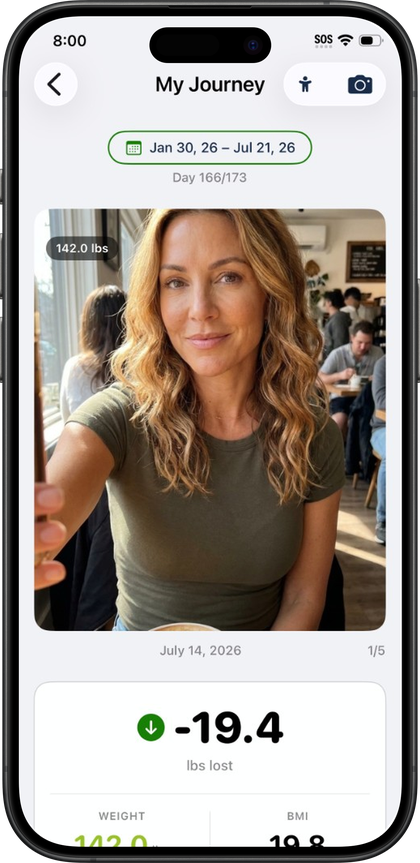
This isn't about replacing the scale, it's about having more than one signal to look at. Pokii's My Journey hub brings weight, BMI context, days on program, progress photos, and measurement entry points together in one place, so you're not choosing between tracking tools or juggling separate apps. On a week when weight barely moves, a change in a waist or hip measurement can be the number that shows the fuller picture, and on a week when measurements hold steady, weight and progress photos fill in the rest. None of this is meant as medical guidance — Pokii is a tracking and education tool, not a source of diagnosis or treatment advice — but having several kinds of data side by side makes it easier to see a personal trend instead of reacting to any single reading.
Logging measurements and watching the trend
Body measurements are logged the same way as everything else in Pokii's daily flow. The floating log actions on the dashboard include a quick menu for weight, body measurements, progress photos, and food scans, so adding a new measurement doesn't require digging through settings or a separate section of the app. Waist, hips, chest, neck, arm, thigh, and ankle can each be logged on their own schedule — there's no need to update every measurement every time, just the ones being tracked.
Once a few entries are logged, Pokii keeps a full history and trend for each measurement, the same way it does for weight and shots. The Calendar tab's month and list views show body measurements alongside shots, check-ins, photos, weight, and food scans on the days they were logged, with a tap into any past entry to review or edit it. The My Journey hub is the other place measurements live, offering dedicated entry points for logging alongside weight, BMI context, days on program, and progress photos — everything about physical changes in one place instead of scattered across different screens. Body measurement tracking, including the history and trend view, is built into Pokii, so logging a measurement and seeing how it moves over time stay in the same flow as the rest of your tracking.
Bringing measurements to a follow-up appointment
Pokii's configurable PDF progress reports turn logged data into a shareable summary you can bring to appointments. Body measurements are one of the optional sections on the report settings screen, alongside weight, target weight, shots, injection sites, pain, side effects, appetite, mood, notes, the daily log, and stats cards — each report can include exactly the sections that matter for the date range being reported on.
Because the report pulls directly from waist, hip, chest, neck, arm, thigh, and ankle entries, there's nothing extra to prepare before a follow-up visit. Turning on body measurements alongside weight and shots turns weeks of tracking into a page that can be handed to a clinician instead of scrolling through a phone during the appointment. Saved reports keeps previously generated PDFs available in-app too, so a past report can be reused or a fresh one generated that reflects the latest measurements right before walking in.
Always follow your prescriber’s instructions for GLP-1 medications. Pokii helps you log and visualize your journey; it does not replace professional care.