Alternatives
Pep Alternative for GLP-1 Logs
Pep (GLP-1 Tracker: Pep) vs Pokii: Pep runs on iPhone, iPad, and Android with broad logging, AI food scan, and 10 languages. Pokii is on iPhone and iPad today (Android coming soon) with richer PK charts (incl. Per Compound), built-in food logging, Health write-back for nutrition, widgets, and PDF progress reports. No confirmed Pep export—switching to Pokii means a new log (Shotsy JSON import is separate).
Quick answer
- Stay on Pep if: You need Android, non-English UI, or one app across mixed devices.
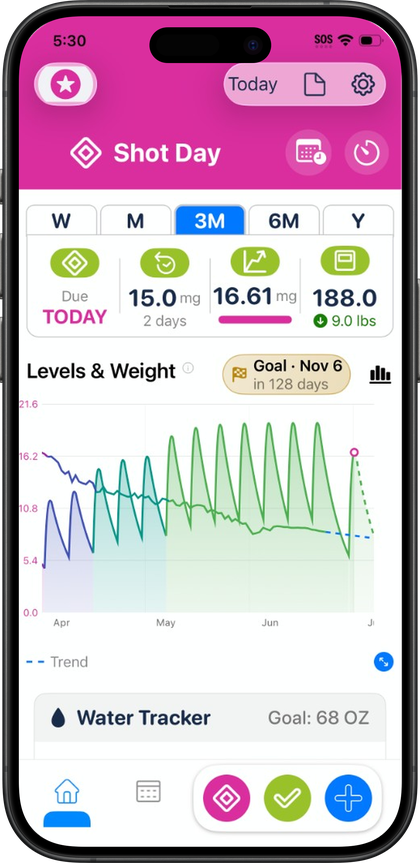
- Consider Pokii if: Apple ecosystem depth matters—custom PK meds, full-screen iPad chart, built-in food logging on Today's log, home screen widgets, configurable PDF progress reports.
- Food logging: Both support in-app meal capture; Pokii keeps food on the same timeline as shots and writes macros to Apple Health; Pep also leans on a FatSecret-backed database per public materials.
- Migration: Plan to log fresh in Pokii or use Shotsy JSON if you have it; see in-app import settings.
What Pep does genuinely well
Pep is on iPhone, iPad, and Android through the App Store and Google Play. Pokii is on iPhone and iPad today, with Android in active development. If your household mixes Android and iOS today, Pep spans both; Pokii fits an Apple-first setup with Android on the way.
Pep is also well reviewed. As of this writing it holds a 4.7 out of 5 rating from 830 App Store ratings, a number independently corroborated by a third-party comparison site that logged 4.7 stars from 777 ratings a few weeks earlier — consistent with normal rating growth over time, not an outlier. That's a real, sustained track record, not a marketing number pulled from launch week.
Its core logging is comprehensive: injectable and oral GLP-1 dosing across Ozempic, Wegovy (pill and injection), Mounjaro, Zepbound, Rybelsus, and compounded tirzepatide or semaglutide, plus injection site rotation, weight, body measurements, progress photos, water, and side-effect notes, all in one app per its App Store description. On top of that, Pep has an AI food photo scanner — snap a photo of a meal and get calorie, protein, fiber, and fat estimates — backed by a food database through the FatSecret API, with barcode scanning and saved favorite meals. Pokii includes built-in nutrition label and meal scanning on the same timeline as GLP-1 logging, with macro estimates written to Apple Health. Label scanning is the approach Pokii recommends for accuracy.
Language support is another real advantage: Pep is localized into 10 languages, including Spanish, French, German, Italian, both Brazilian and European Portuguese, Arabic, Hindi, Japanese, and Chinese Traditional. Pokii has not published a comparable language list on the App Store, so if you need the app itself in a language other than English, Pep's breadth is a legitimate reason to stay with it today.
Where Pokii differs
Pokii trades platform breadth for depth in a few specific areas, all tied to features that are actually built into the app rather than just claimed. The clearest is medication modeling. Pokii's built-in library covers 16 named medications, including Zepbound, Wegovy, Wegovy Pill, Foundayo, Mounjaro, Ozempic, compounded tirzepatide and semaglutide, Retatrutide, Saxenda, Rybelsus, Victoza, Trulicity, CagriSema, Bydureon, and Tanzeum — a longer list than Pep's six named drugs plus compounds. You can also add fully custom medication profiles with half-life, Tmax, and bioavailability fields that feed directly into the projected level chart, something not described anywhere in Pep's materials. Pokii's charts also support a "per compound" mode that groups branded medications by their underlying molecule, alongside combined and per-medication views, plus pan, zoom, full-screen viewing, and dose- or medication-based chart coloring in Pokii.
Pokii's Apple Health integration goes further than reading activity data. With permission, Pokii reads body mass, lean body mass for a chart overlay, dietary water, and full nutrition macros (calories, protein, carbs, fat, fiber, sugar, sodium), and it writes body mass, water, and the nutrition macros captured from its own meal scanner back into Health, so the numbers on your dashboard and in the wider Health app actually stay in sync. Pep's food logging, by contrast, appears to live in its own FatSecret-backed database rather than round-tripping through Health; its only documented Health interaction is reading steps and calories burned. Neither approach is wrong, but it's a real difference if you rely on Apple Health as your source of truth.
A few other Pokii features aren't mentioned anywhere in Pep's public materials: a configurable PDF progress report where you choose sections such as projected levels, weight, shots, injection sites, pain, side effects, appetite, mood, and body measurements; home-screen widgets for shot progress and the medication level chart; an injection-pain slider per shot; a room-temperature timer with countdown and alarm before injecting a warmed pen; and a shot scheduler that lets you preview simulated future doses on the chart before you log them. Pokii's calendar tab, with both month and list views, also shows shots, check-ins, photos, weight, body measurements, and food scans together in one place. None of this makes Pep a lesser app — it simply hasn't advertised these specific capabilities, and the two products emphasize different things.
What's genuinely unverified about Pep
To be fair to Pep, several claims that circulate about it — including on other competitors' comparison pages — aren't things Pep itself confirms, and this page won't state them as fact. Exact current subscription pricing is one: Pep's App Store listing shows a scattered set of historical and regional price points for its single in-app purchase ($9.99, $19.99, $29.99, and others, including named promotional offers), which looks like Apple's price-history display rather than one current number. A user review mentions "$10 a month, or $40 a year," which is plausible but not an official, current, or independently confirmed price.
The claim that Pep limits free users to a single active medication also isn't something Pep states itself — it comes from a rival app's marketing comparison page, and that same page was found to contain at least one outdated claim about Pep (it said Pep had no Apple Health integration at all, which is incorrect as of Pep's 2025 update). So that single-medication claim is treated here as unconfirmed, not fact. Similarly, whether Pep has any data export feature, home-screen widgets, or a detailed free-versus-paid feature breakdown isn't documented anywhere in Pep's own App Store listing or website. Absence of a feature from marketing materials isn't proof it doesn't exist somewhere in the app — it just means it isn't something this comparison can confirm one way or the other.
Migration reality: there's no confirmed way to bring your data over
If you're currently using Pep and considering a switch, the honest answer is that there's no verified export path out of Pep today. Pep's App Store listing and official website make no mention of CSV, JSON, or PDF export or backup anywhere in the current feature list, FAQ, or version history. That's consistent with (though not proven by) a competing app's marketing page, which claims outright that Pep has no export or sharing feature at all.
Pokii, for its part, can import a Pokii JSON backup, restore from iCloud, import Shotsy JSON or.shotsyjson files, and import a header-based CSV — but none of those paths were built around or tested against Pep's data, because there's nothing from Pep to test against. In plain terms: switching from Pep to Pokii today means starting your log fresh, not migrating it.
Given that, who should actually make the move? If you're on Android, need the app in one of Pep's 10 supported languages, or you specifically want AI food scanning without paying for a premium tier, Pep is a reasonable choice and switching to Pokii would mean giving up real, working features. If you're on iPhone or iPad and want deeper pharmacokinetic modeling — custom medication profiles, a per-compound chart view, a larger built-in drug library, PDF progress reports, and nutrition data that actually writes back into Apple Health — Pokii is built around exactly that, and it's worth accepting the one-time cost of re-entering your history to get it. If neither of those tradeoffs matters much to you, the honest move is to stay with whichever app you're already logging in consistently, since consistency matters more than any single feature on either side.
Pokii is a tracking and education tool. It does not provide medical advice, diagnosis, or treatment. Talk with your clinician about dosing, side effects, and any change to your plan.