Side effect guides
Nausea on GLP-1: Log Triggers in Pokii
Nausea is the most common GLP-1 side effect in clinical trials — and for most people it is not random. It often spikes after starting or increasing a dose and tracks with meal size, eating speed, and hydration. This guide covers labeled rates, commonly discussed approaches (general information only), when to call your prescriber, and how logging in Pokii helps you see your own pattern beside dose timing.
Pokii does not provide medical advice, diagnosis, or treatment. Severe abdominal pain, persistent vomiting, or signs of dehydration require prompt clinical care — not self-management from an app.
Quick answer
- How common: Roughly 40–44% on semaglutide 2.4 mg obesity trials vs. ~16% placebo; up to ~29% on tirzepatide label summaries — usually worst after starting or each dose increase.
- Typical triggers: Large or high-fat meals, eating quickly, lying down soon after eating; often eases within one to few weeks at a given dose.
- Commonly discussed: Smaller, slower meals; lower-fat choices; steady hydration through the day — general information only, not personal instructions.
- Call your prescriber: Nausea or vomiting that does not resolve, prevents keeping fluids down, or shows dehydration signs; urgent care for severe upper abdominal pain radiating to the back (possible pancreatitis on labels).
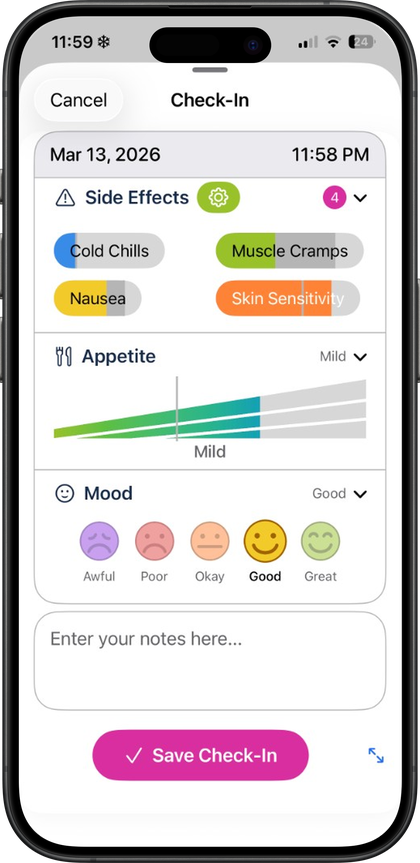
- In Pokii: Rate nausea severity in daily check-in beside dose history, meals, and water; PDF reports bundle symptoms for prescriber visits.
How common nausea is — by the numbers
GLP-1 receptor agonists and dual GLP-1/GIP drugs like tirzepatide slow gastric emptying and act on brain nausea pathways. Nausea is listed as a common adverse reaction on semaglutide (Wegovy/Ozempic) and tirzepatide (Zepbound/Mounjaro) labels.
Reported trial ranges commonly cited:
- Semaglutide 2.4 mg (obesity trials): nausea in roughly 40–44% of patients vs. ~16% placebo in STEP program summaries
- Tirzepatide: nausea in up to roughly 29% in Zepbound label summaries
- Wegovy-specific fatigue context: fatigue ~11% vs. 5% placebo — nausea remains the headline GI effect
Nausea most often appears or worsens after starting and after each dose increase, typically peaking in the first one to few weeks at a new strength before easing. Triggers commonly discussed include large meals, high-fat foods, eating quickly, and lying down soon after eating.
Commonly discussed approaches — not personal instructions
Patients and clinicians often discuss: smaller, more frequent meals; lower-fat choices when gastric emptying is slowed; eating slowly and stopping at first fullness; staying upright after meals; and steady hydration (sipping through the day rather than large volumes at once) because GI effects can raise dehydration risk on GLP-1 labels.
Ginger tea or candies are frequently mentioned anecdotally — not an FDA-labeled GLP-1 nausea treatment. Persistent or worsening nausea warrants a prescriber conversation about timing, titration pace, or the medication itself.
When to contact a prescriber
Per semaglutide manufacturer and FDA labeling, contact a healthcare provider promptly if nausea, vomiting, or diarrhea does not resolve, prevents keeping fluids down, or is accompanied by signs of dehydration (GI fluid loss can affect kidneys).
Seek urgent care for severe, persistent upper abdominal pain radiating to the back — a possible pancreatitis signal on GLP-1 labels. Pokii logs patterns; it does not triage symptoms.
Track nausea beside doses, meals, and water in Pokii
- Daily check-in: Rate nausea severity, customize the side effects list, add notes with relative-to-last hints
- Dose timeline: Shot history and titration steps on the same calendar as symptom entries
- Meals: Nutrition dashboard from Apple Health (including Pokii meal scans) to line up meal size/timing with nausea later that day
- Water tracker: Glass-based logging and smart reminders — hydration is emphasized in FDA GI guidance
- PDF reports: Bundle side effects, appetite, mood, and notes for prescriber visits
The projected medication levels chart (educational model, not labs) adds context for whether nausea clusters after a dose increase or near the end of a weekly cycle.
Frequently asked questions
Is nausea normal on Wegovy or Zepbound? Nausea is among the most frequently reported side effects in trials for both semaglutide and tirzepatide products — especially during titration. "Normal" does not mean ignore it if severe or persistent; talk to your prescriber.
How long does GLP-1 nausea last? Many people report improvement within one to few weeks at a given dose, but duration varies. Logging severity day by day helps you report trends accurately.
Can dehydration make GLP-1 nausea worse? Labeling links GI side effects to fluid loss and dehydration risk — another reason steady water intake is commonly discussed alongside nausea management.
Does Pokii treat nausea? No. Pokii helps you record severity, timing, meals, and hydration so you can discuss patterns with a licensed clinician.