Your GLP-1 journey
GLP-1 First-Month Guide with Pokii
The first month on a GLP-1 is when schedule, titration, and side effects collide — before anything feels routine. You are usually on a starter dose stepping up on a prescriber-set plan, while nausea, appetite change, and fatigue may peak in the weeks after each increase. In STEP-1, semaglutide 2.4 mg reached 14.9% mean weight loss at 68 weeks (n=1,961) — but most GI side effects concentrate in early titration, not month six. This page is a reflective guide to that uneven first stretch (not an app setup checklist) and why a daily log in Pokii from day one beats reconstructing month one from memory later.
Pokii does not provide medical advice, diagnosis, or treatment. Dosing, titration, and side effects belong in conversations with your licensed prescriber — not in a guide or tracking app.
Quick answer
- Starter doses: Wegovy pens often begin at 0.25 mg weekly; Zepbound at 2.5 mg weekly — neither is maintenance; increases typically every four weeks if tolerated.
- Side effects cluster early: Nausea (~40–44% semaglutide trials, ~29% tirzepatide labels) and fatigue often peak in weeks 2–4 at a new strength, not month six.
- Track from day one: Shot or pill timing, dose strength, injection site (injectables), side-effect severity, appetite, mood, water, meals, and weight — one timeline beats memory at follow-up.
- Daily habit: Pokii check-in takes under a minute; quiet days matter when a later dose increase makes earlier patterns visible.
- For visits: PDF progress reports bundle shots, side effects, appetite, mood, weight, and notes with dates your prescriber can act on.
What the first weeks commonly involve
Titration: Wegovy pens often start at 0.25 mg weekly; Zepbound at 2.5 mg weekly — neither is a maintenance dose. Increases typically happen every four weeks if tolerated. That means month one is often one dose strength, with the biggest adjustment happening in weeks 2–4.
Side effects: Nausea is reported in roughly 40–44% of semaglutide obesity-trial participants and up to ~29% in tirzepatide label summaries — usually worst after starting or stepping up. Fatigue appears in about 11% vs. 5% placebo in Wegovy trials. Symptoms can ease within one to few weeks at a given dose, but timing varies person to person.
No single normal: Some people feel little in week one and more in week three; others notice appetite change early. Pokii's medication library supports interval or weekday schedules with per-medicine reminder times — your month one is yours to record, not compare to a generic template.
Build the check-in habit before you think you need it
Memory fades fast. Pokii's daily check-in takes under a minute: side effects with intensity, appetite and mood sliders, and notes with relative-to-last hints. Quiet days matter — they make later spikes visible.
Customize the side effects list to the few you actually watch (nausea, constipation, fatigue). Mild entries in week one that repeat after a dose increase in week five are patterns — invisible without a log.
Log shots, water, and meals on the same timeline
Month-one logistics trip people as often as chemistry: forgetting shot day, under-eating on low appetite, or skipping water when nauseated.
- Shot reminders per medicine, plus overdue and shot-day dashboard banners
- Water tracker with glass-based goals — dehydration risk is flagged on GLP-1 labels when GI effects hit
- Meal logging via nutrition label scanning into Apple Health — useful if nausea tracks large or high-fat meals
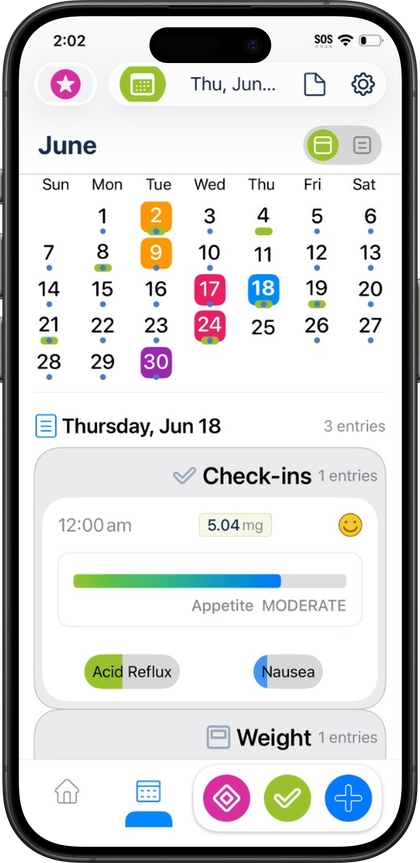
- Calendar month/list views unify shots, check-ins, weight, and notes
What to bring to your first follow-up
A first-month log answers prescriber questions with dates: When did nausea peak? Did it follow the 0.5 mg step? How is appetite trending? Pokii's PDF progress reports can include shots, side effects, appetite, mood, weight, and notes — a concrete starting point instead of "I think the first two weeks were rougher."
Frequently asked questions
What should I track in my first month on a GLP-1? Shot or pill timing, dose strength, injection site (injectables), side-effect severity, appetite, mood, water, meals, and weight — clinical educators commonly cite this bundle; Pokii keeps it on one timeline.
When do GLP-1 side effects peak? Often in the first one to few weeks after starting or after each dose increase, per trial and label summaries. Your log may show a different shape — that is useful data for your prescriber.
Is the first month the hardest? Many people find titration months less steady than later maintenance, but experiences differ. Tracking from day one makes your answer evidence-based for you, not generic.
Is this the same as the first-month checklist? No. A separate procedural app-setup checklist exists in the app; this guide is about what the early weeks commonly feel like and why logging early helps.
Does Pokii tell me if my first month is going well? No. Pokii organizes what you log; your prescriber interprets whether titration should continue, pause, or change.