Side effect guides
Constipation on GLP-1: Hydration and Fiber
Constipation is one of the most frequently reported digestive side effects of GLP-1 medicines such as semaglutide, tirzepatide, and liraglutide. It's closely connected to how these medicines work, so it often shows up alongside other GI changes as your body adjusts to treatment, and it can range from a mild, occasional nuisance to something more persistent that's worth flagging to your care team. This page covers why constipation happens on GLP-1s, approaches that are commonly discussed for managing it, when it's time to contact a prescriber, and how Pokii's tracking tools can help you keep a clear record to share with your care team.
Why constipation happens on GLP-1s
GLP-1 receptor agonists slow gastric emptying and reduce gastrointestinal motility as part of how they work, and this delayed transit is the mechanism most consistently cited behind GLP-1-related constipation. Research reviews describe this slowing as central to the medicine's effect on appetite and blood sugar, but it also means food and waste move through the digestive system more slowly than usual.
When colonic transit slows down, the colon has more time to absorb water out of stool, which tends to make stool harder and more difficult to pass. Reduced gastric and intestinal secretions, along with GLP-1's effects on gut-brain motility signaling, are also thought to play a role. On top of the direct motility effect, appetite is often reduced on these medicines, so people may eat and drink less overall — lower fiber intake and lower fluid intake are frequently discussed as compounding factors alongside slower transit. In other words, the same appetite reduction that supports weight management can also, indirectly, make constipation more likely if fluid and fiber intake drop along with overall food intake.
Constipation is a common experience on GLP-1 therapy. FDA labeling lists constipation among the most frequently reported adverse reactions for semaglutide, and general reporting on semaglutide-class medicines describes gastrointestinal side effects, including constipation, as occurring notably more often than with placebo in clinical trials. Reported rates and duration vary across studies, doses, and individual medicines, so it's worth asking your prescriber or reviewing your medicine's prescribing information for numbers specific to what you're taking.
Commonly discussed approaches: hydration, fiber, and activity
The following are general approaches commonly discussed in patient materials and clinical guidance for constipation on GLP-1s. They are not personalized medical advice or instructions — what's appropriate for you depends on your health history, other medications, and your prescriber's guidance.
Adequate fluid intake is frequently cited as a basic, commonly recommended step for managing constipation on GLP-1s. It's especially noted as important alongside increasing fiber, since adding fiber without enough fluid can make bloating worse rather than better.
Dietary fiber is commonly described as adding bulk to stool and helping keep things moving through the digestive tract. Sources generally note that fiber intake is often increased gradually rather than all at once, since a rapid jump in fiber can itself cause bloating and discomfort.
Regular physical activity is another supportive, non-drug approach that general medical guidance on constipation commonly discusses alongside hydration and fiber. As with the other approaches here, what level and type of activity makes sense for you is worth discussing with your prescriber.
These are commonly discussed lifestyle approaches only, not a treatment plan. Some sources also mention osmotic laxatives, such as macrogol/PEG or magnesium-based products, as options a clinician may recommend in certain situations. Any laxative or supplement use should be discussed with a prescriber or pharmacist first, particularly given other medications or health conditions you may have.
When to contact a prescriber
Reach out to your prescriber if constipation is severe, persistent, or not improving with general measures. Beyond ordinary constipation, it's important to know the warning signs of a rarer but serious complication: bowel obstruction, a risk that has been added to GLP-1 prescribing labeling and discussed in case-report literature.
Seek prompt medical attention if you experience possible signs of bowel obstruction, including severe or worsening abdominal pain, significant bloating or abdominal distention, an inability to pass gas or stool, repeated vomiting or an inability to keep fluids down, or persistent nausea that isn't improving. These symptoms can indicate a medical emergency. Contact a healthcare provider promptly, or seek urgent or emergency care, rather than waiting to see if they resolve on their own.
What Pokii supports for tracking this
Pokii is a tracking and education tool — it does not diagnose, treat, or give medical advice. What it can do is help you log patterns around hydration, nutrition, and side effects so you have a clearer record to discuss with your prescriber.
Pokii's water tracker offers glass-based quick add with a daily goal in Pokii, so you can log fluid intake as you go through the day. Pokii also includes smart, pattern-based water reminders and a combined water-and-nutrition dashboard module for a more consolidated view.
On the nutrition side, Pokii reads dietary fiber from Apple Health, along with calories, protein, carbohydrates, fat, sugar, and sodium, and displays nutrition totals on the dashboard — this is available in Pokii with permission granted. Pokii also includes AI photo meal capture, which lets you photograph a meal, review AI-estimated nutrition, and write fiber and other macros back to Apple Health, plus the ability to set custom nutrition targets. Together, the water and fiber totals on your dashboard can give you an at-a-glance sense of two of the commonly discussed factors in managing constipation, without Pokii making any claim about what your personal targets should be.
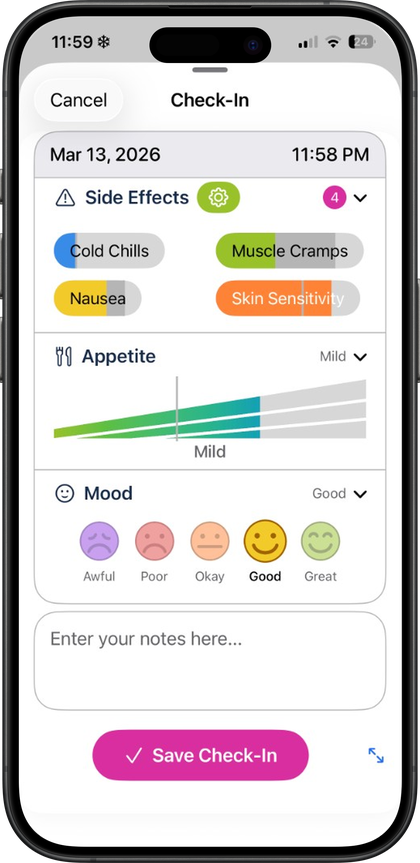
For side effects specifically, Pokii's daily check-in supports optional logging with an intensity rating per effect, alongside appetite, mood, and free-text notes, and a custom side-effects list lets you manage which effects — including constipation — appear in your check-ins. That history ties to your dose timing and can be included in PDF progress reports, making it easier to bring a clear picture to your prescriber.
Always follow your prescriber’s instructions for GLP-1 medications. Pokii helps you log and visualize your journey; it does not replace professional care.